 |
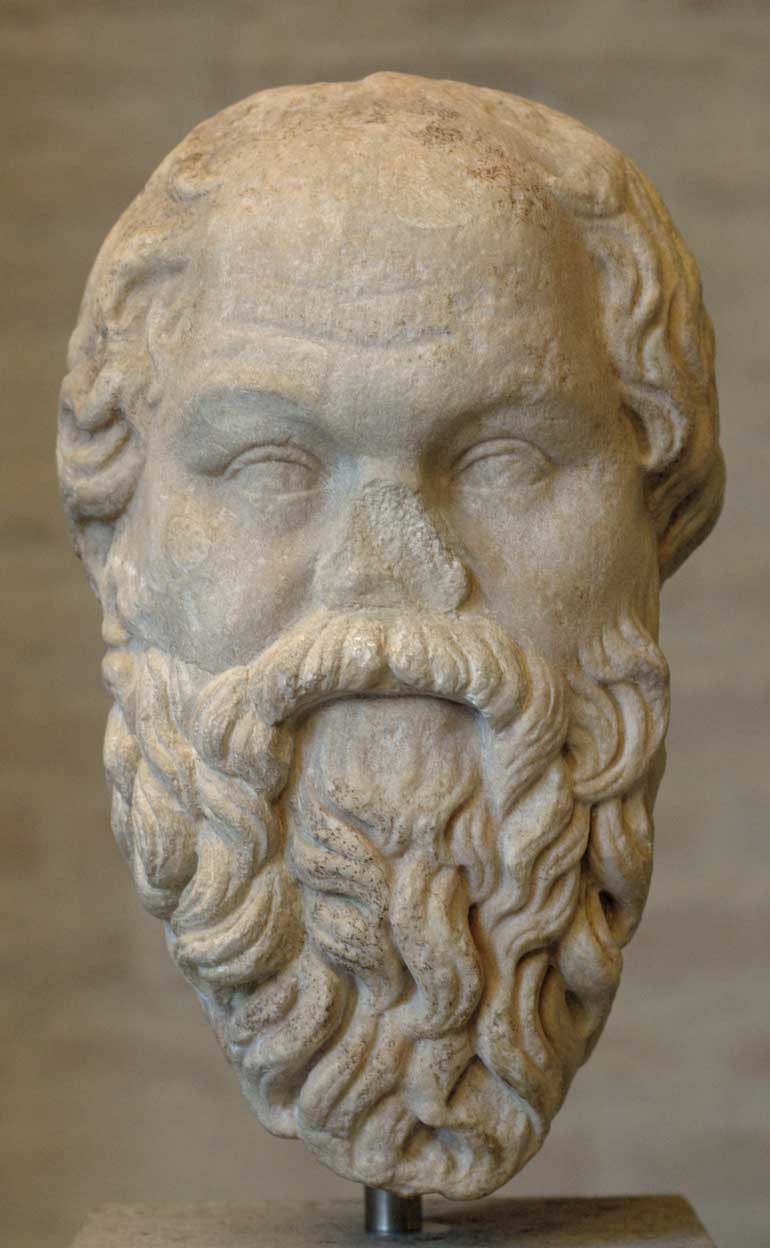
| Socrates |
Presocratics were the early philosophers remembered not because of the answers they gave, but rather because of the questions they asked. The term Presocratics simply means before Socrates. So the philosophers, whom followed Socrates, in the sixth century BC, had very little in common with one another with the exception of the time period they lived in. These Presocratic philosophers used the power of human reason to try to discover how the world developed, how it operates, and understand the placements of humans inside the world. During the Archaic period, it was the first time in history that these Presocratic philosophers denied God and used what we refer to today as science, as a way to explain phenomenon’s that occur in the world. Some of the questions these early philosophers would inquire were on the subjects of physics mathematics, astronomy and biology.


Aristotle initiated the phrase metaphysics; he depicts this new science of ultimate reality as the nature of the physical world ruled over by this Supreme Being. It was further explored in the Physics, which incorporated the elements that compose the universe and the laws by which they expose. Aristotle’s philosophy concerned Plato’s Theory of Forms. Plato proposed a higher aspect of existence for the ideal forms and thereby created a split between the apparent reality that we distinguish and the indisputable reality that we can only know by philosophical consideration. Aristotle’s philosophy claims that the forms were actually present in the objects we see around us, thereby eliminating the split between the two realities that Plato proposed in his philosophical studies. On the other hand, Thales of Miletus believed water alone was the element that changed the world of nature. Empedocles of Acragas introduced us to the four elements – fire, earth, water, air. The combination and separation of these elements, in a repeated pattern, describes how life as well as countries were born, grew, decayed, and died. Last but not least, there was Anaxagoras of Clazomenae; he believed life contained an infinite number of small particles. He declared how unity, in nature, came from the force of reason.
 |
| Thales |
 |
| Empedocles |
In modern day society, we address many philosophical issues on a daily basis, in the United States and around the entire world. I believe the most vital issue is our financial crisis. The idea of how we spend more money than we take in is absolutely outrageous. With the United States having a fourteen trillion dollar debt, there’s no telling when we will get out of this hole. At the rate we are spending money, the United States will be bankrupt and no longer be the superpower of the world. The ethics behind this vast amount of debt is to help people who need it now. However, we don’t stop to think about the future generations that will have to pay off our debt which we have incurred during our lifetime. This anthropological point of view is set up to solve dilemmas only as they occur and not having to worry about the financial issues in future generations. In human nature, it is inclined that we possess anything we desire, no matter what it takes to get it. Due to this nature, the United States government and several others around the world are greedy and spend more money than which they possess.


SOURCES
"Ancient Greek Philosophy [Internet Encyclopedia of Philosophy]." Internet Encyclopedia of Philosophy. Web. 14 Mar. 2011
Cunningham, and Reich. "Early Greek Literature and Philosophy." Cultures and Values. Vol. 1. Mason: Cengage, 2009. 49+. Book.

No comments:
Post a Comment